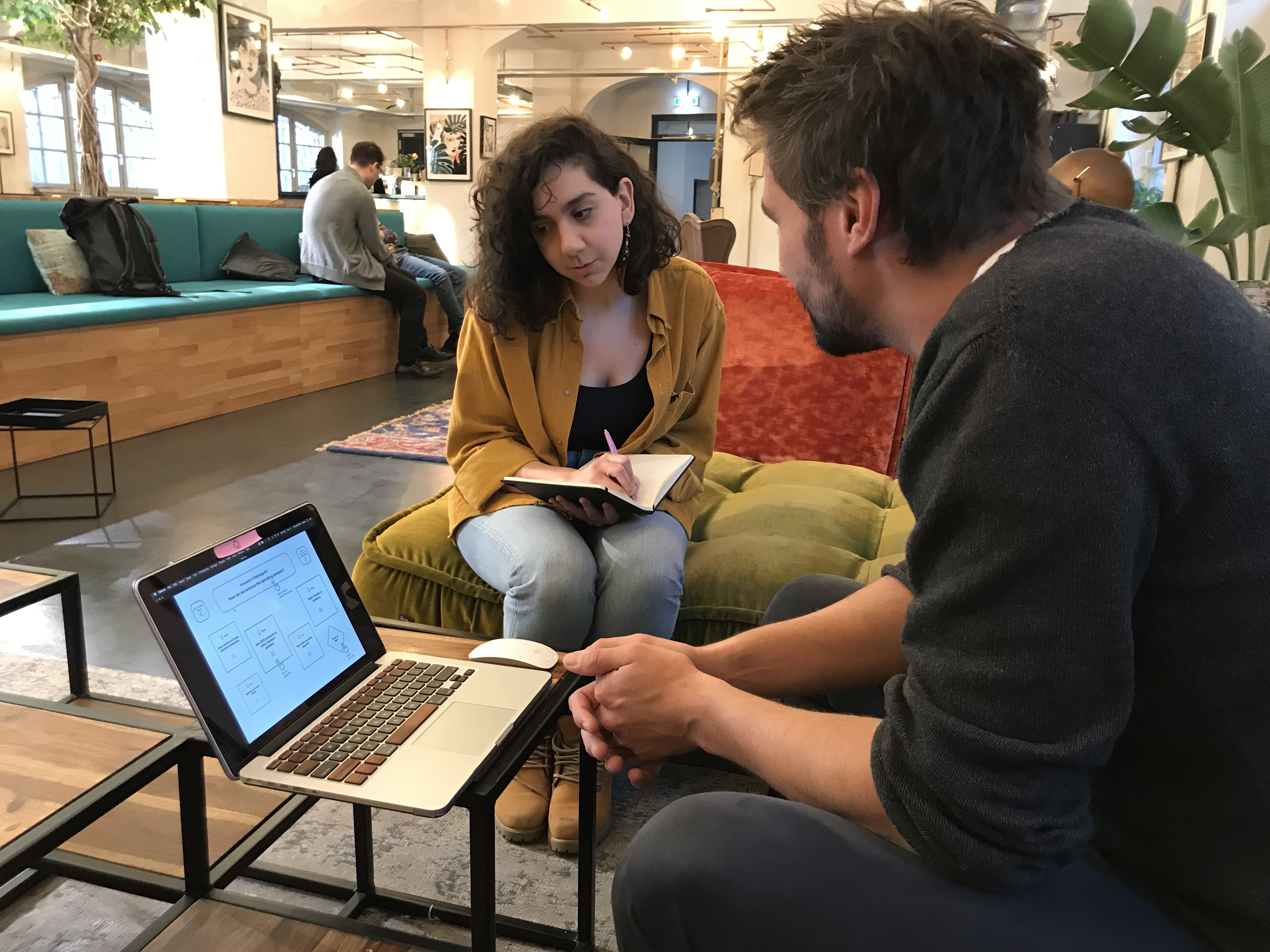
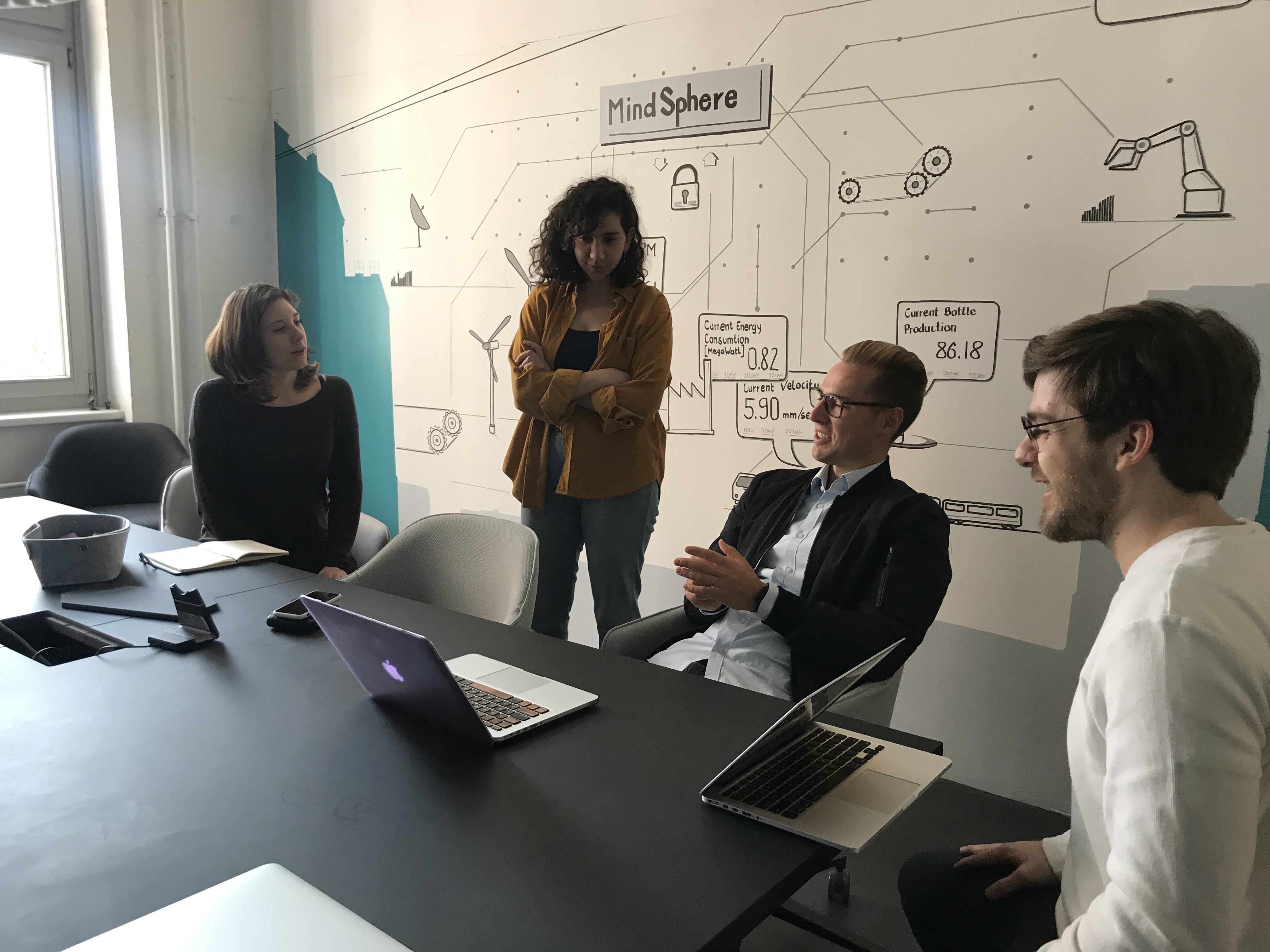
For the final project at Ironhack Berlin UX/UI bootcamp, my team had the chance to work in direct collaboration with Siemens employees to help tackle a problem which Siemens Mobility division had been facing: only 1 in 10 employees are sharing their ideas through the internal company tool.

The main goal was to have more employees share their ideas. So within a time-frame of two weeks we had to:
- Find out what the underlying problem is with the current tool.
- Design a more engaging and efficient way of submitting ideas from the employee’s side on one hand, and assessing and selecting ideas from the management’s side on the other.
I was within a team of four UX/UI students. We all collaborated closely and be involved in every phase of the project. I mostly took responsibility in the user research and user experience.
Before starting out with any interviews, we first wanted to do some research about the company itself, understand the culture and their products. We also conducted research to find out how other companies approach idea-sharing, what tools are being used, what is working, and what is not working.
We visited the Siemens office in Berlin and held two in-person interviews. We also carried out three other interviews over the phone.
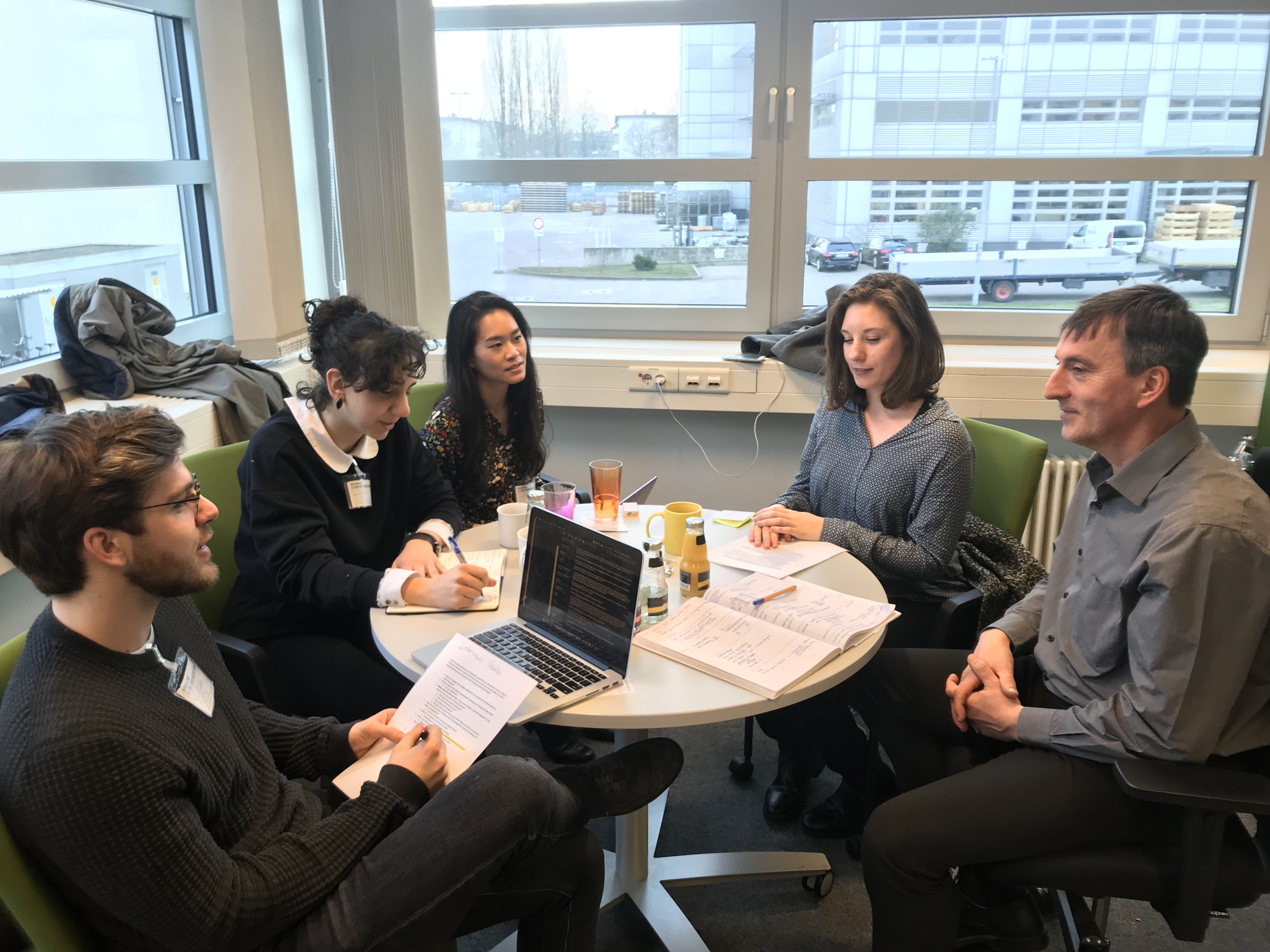
When it came to employee interview questions, not only did we want to know their expectations and behavior towards idea-sharing, we dove a bit deeper to try and understand:
- Their daily lives and routines at work
- Their behavior with one another and with their managers
- Their approach when communicating with managers
- The company culture and how it impacts them
Similarly with the managers, not only did we want to learn how they encourage idea-sharing in specific but also:
- The value and importance tied with employee input
- Their methods of communicating with employees and giving feedback
We put all of the insights gathered from our user research in one huge affinity diagram. We grouped ideas in categories and gave each category a title to make more sense of our insights.
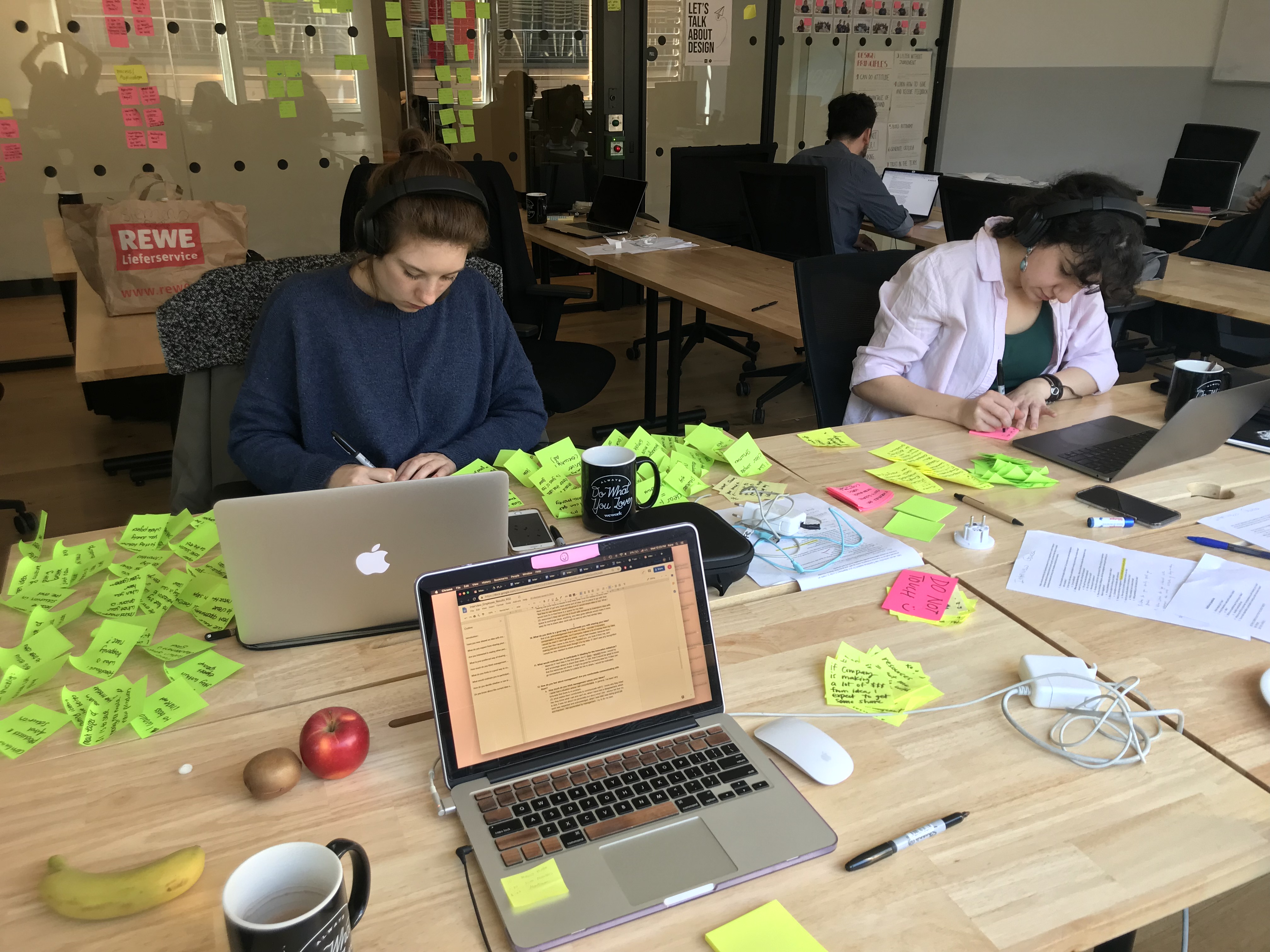
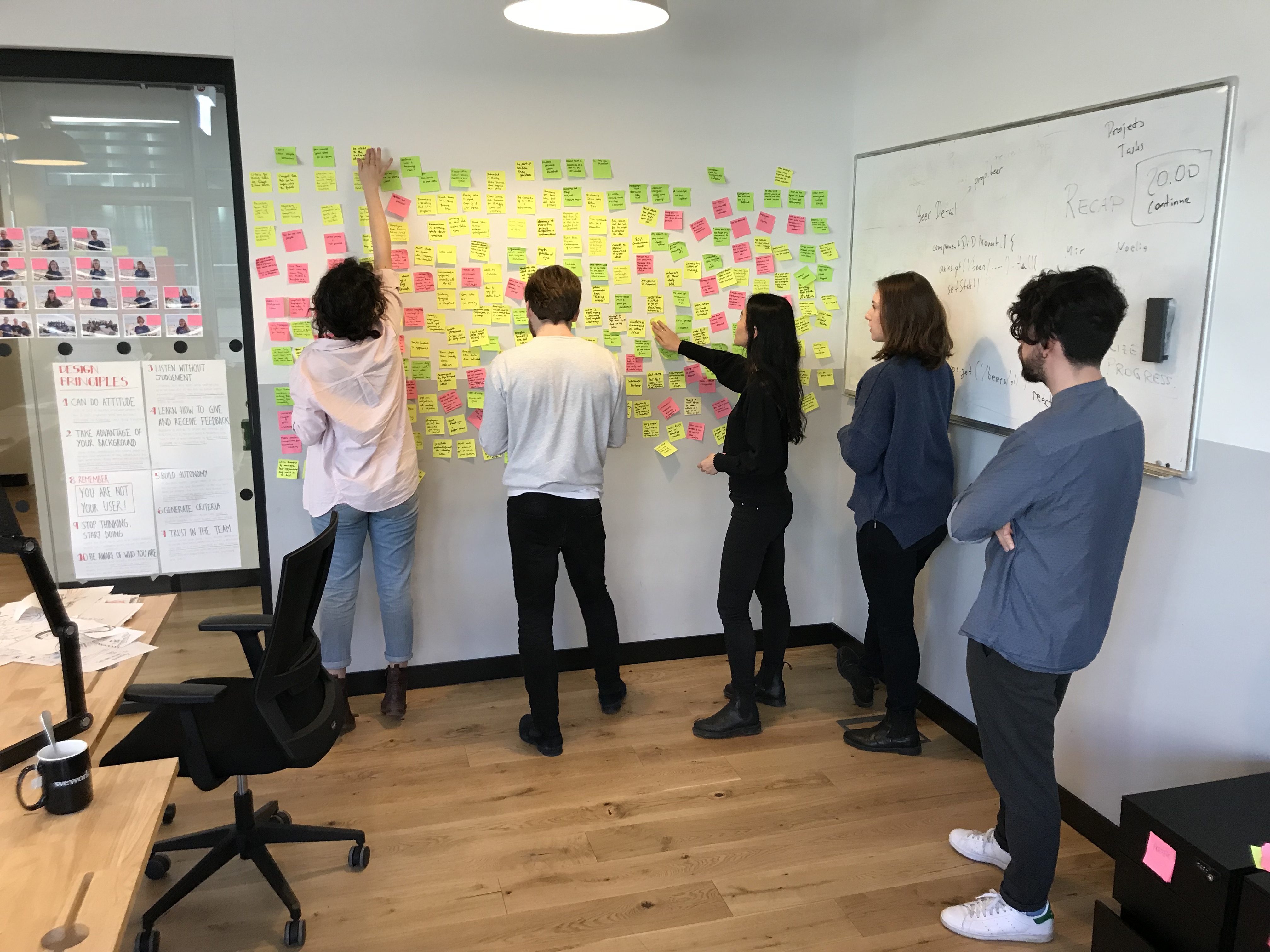
Here are some of the key insights we gathered:
- Idea-sharing doesn’t feel part of daily work
- Employees discuss their ideas during breaks
- The current feedback loop is too long
- The biggest motivator is that their input is valued
- The current tool feels like an “additional click”
We filled out two empathy map canvases (for both employees and managers) to help us synthesize research observations and reveal deeper insights about our user’s needs and behaviors.
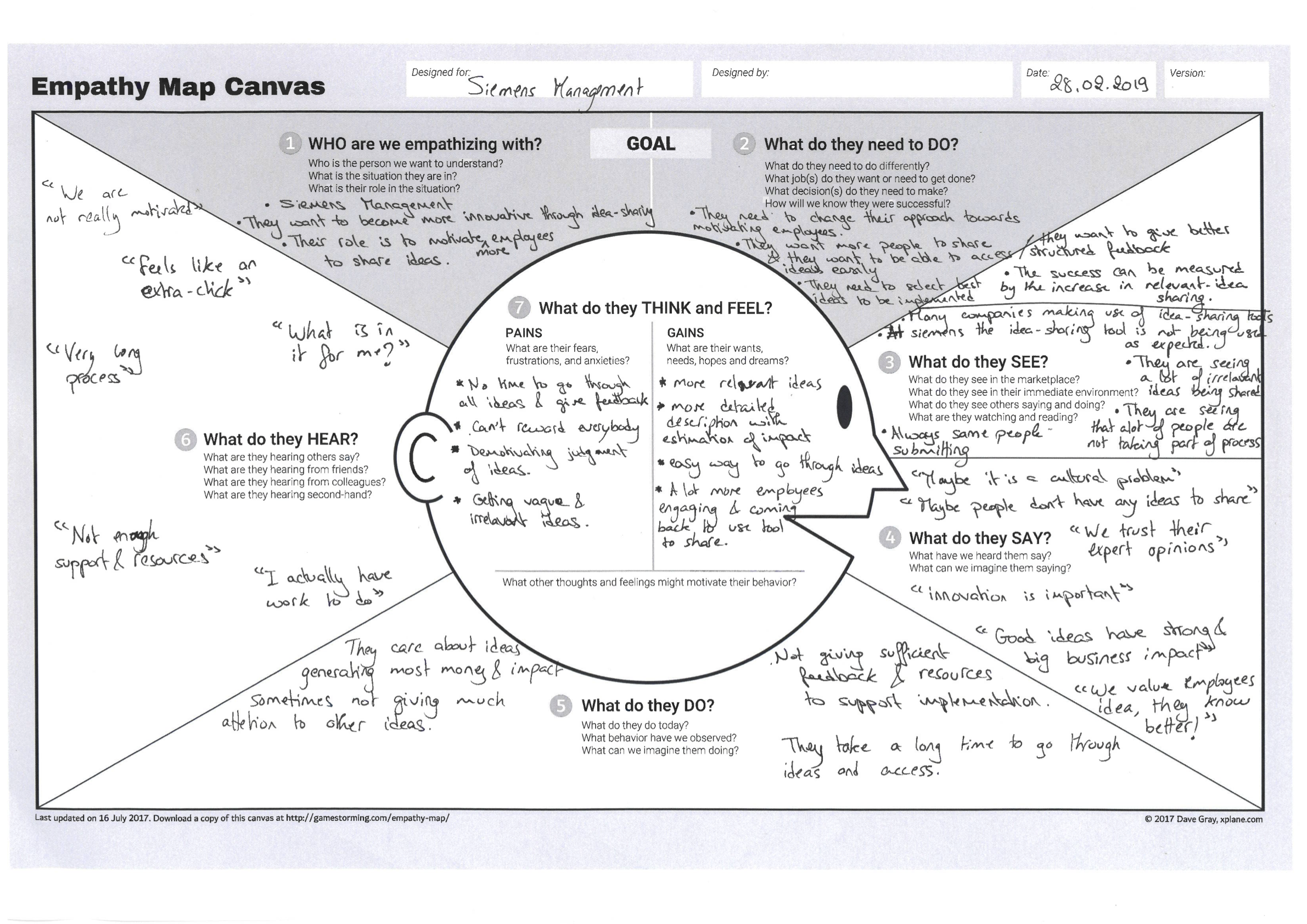
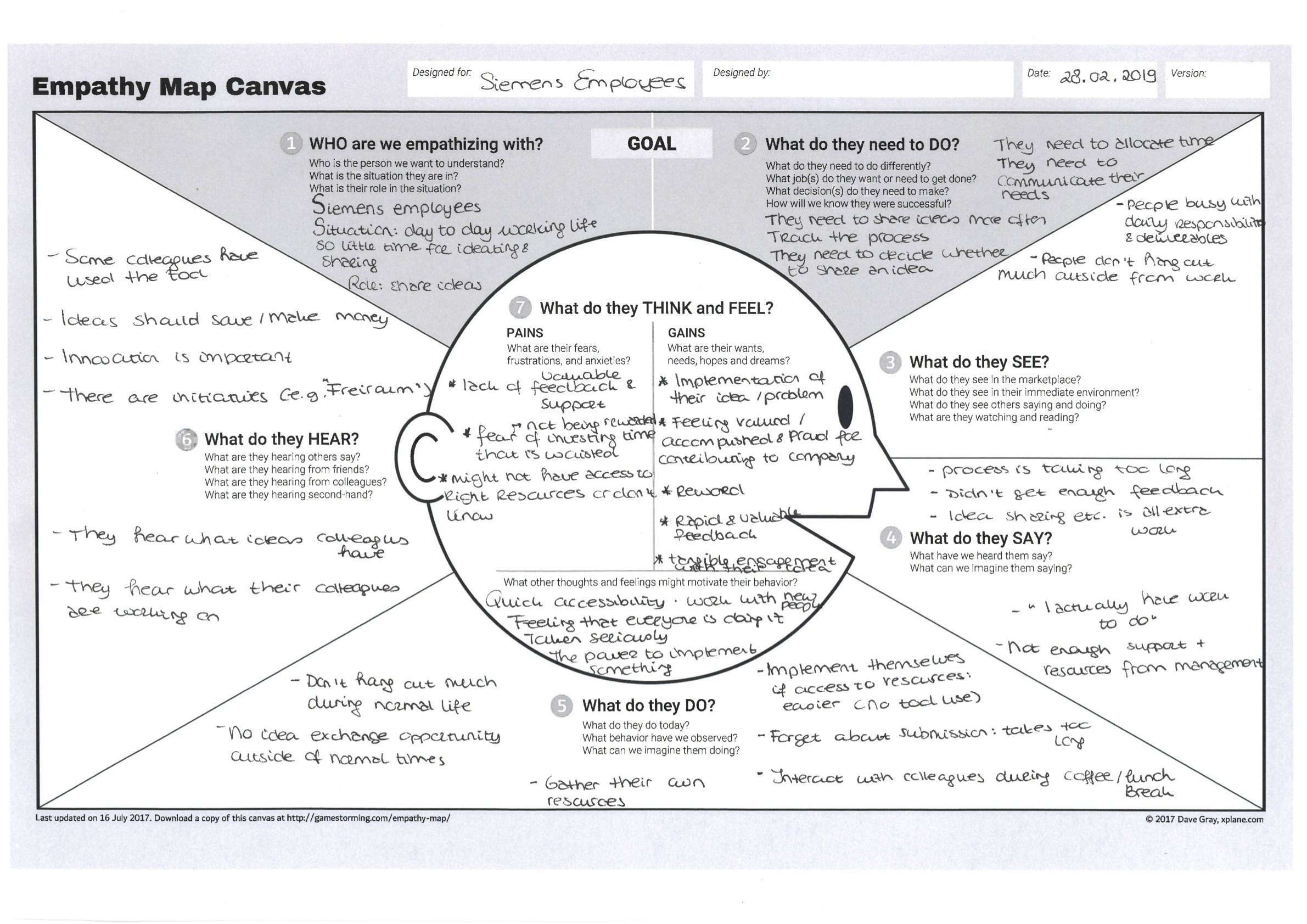
We also put together a user journey so we can get a sense of the employee’s motivations, his needs and pain points.
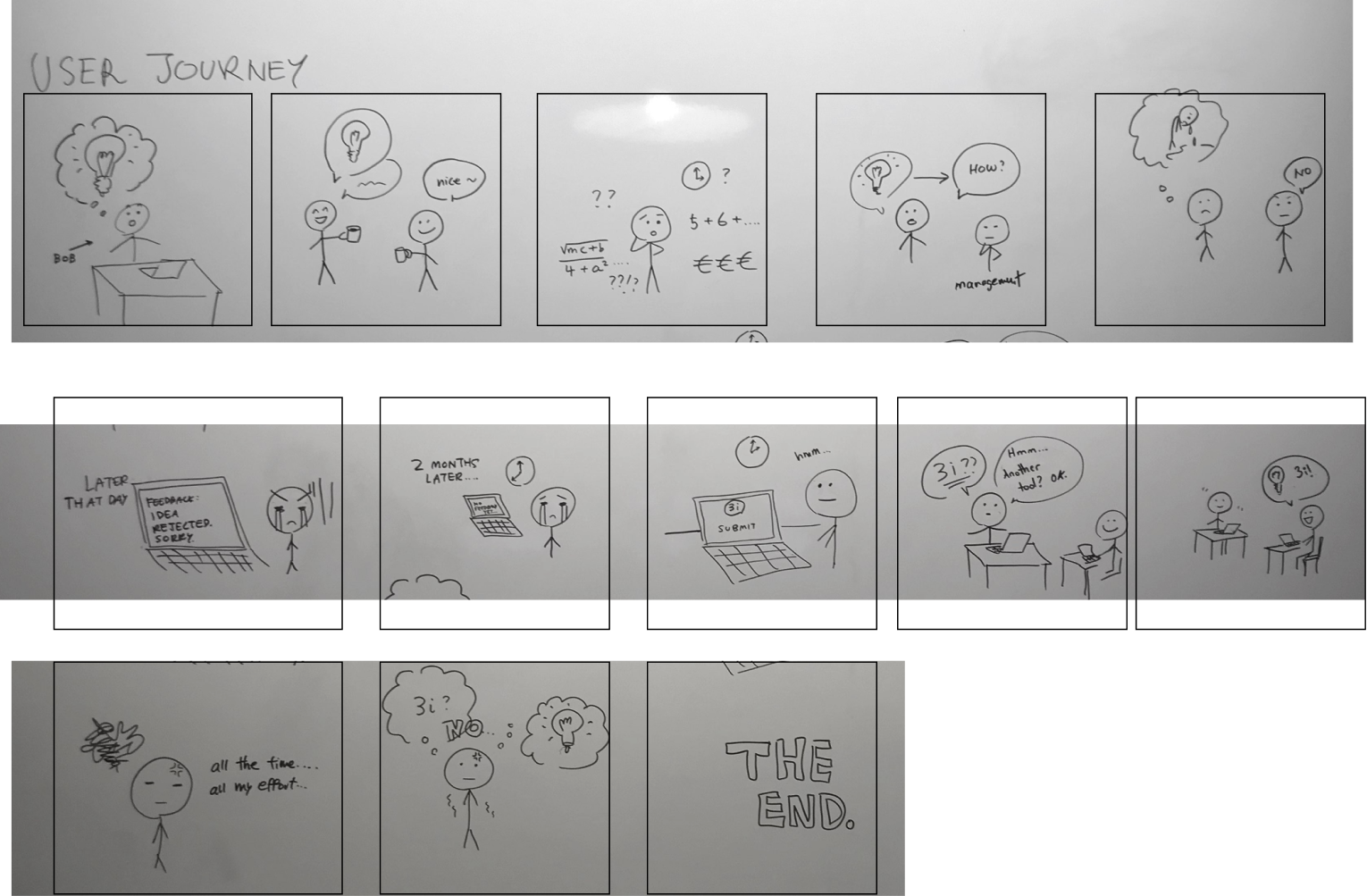
The empathy map canvas and user journey were quick exercises which helped us visualize the experience as a whole in addition to a more focused target on both of our users. We then went back to our affinity diagram with a more in-depth understanding, and were able to create our how might we statements by transforming the category titles from problems into design opportunities. By dot-voting on the HWM statements we had a winner.
How might we integrate sharing ideas as part of the employees’ daily work life?
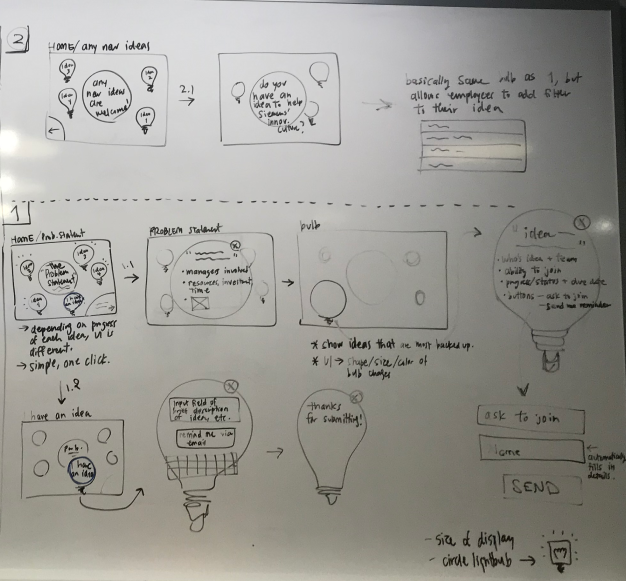
We used the Crazy 8s method, where we each sketched eight distinct ideas in eight minutes. The goal is to push beyond just one idea and to generate a wide variety of solutions. We also went for another method for idea generation: The worst possible idea.
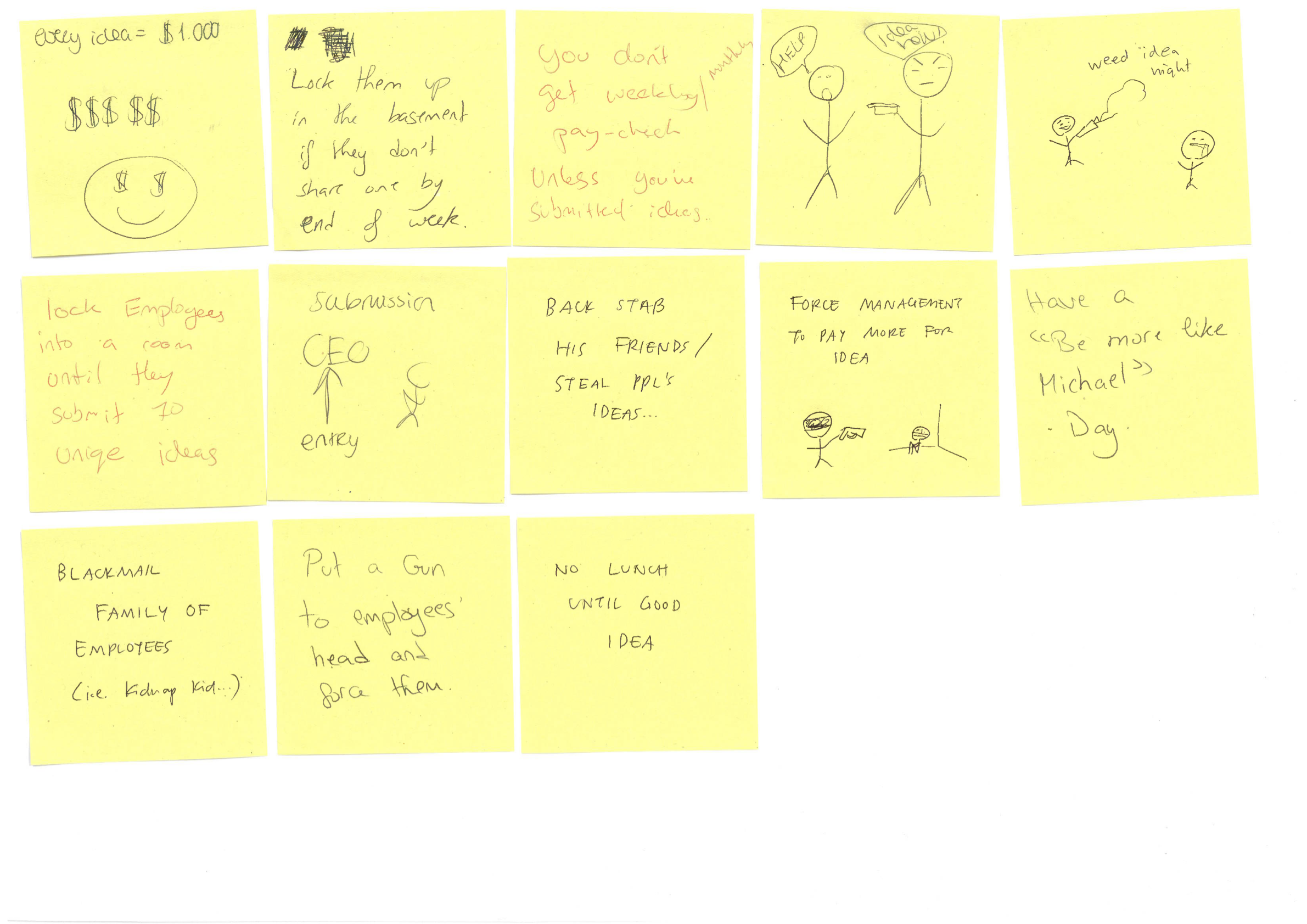
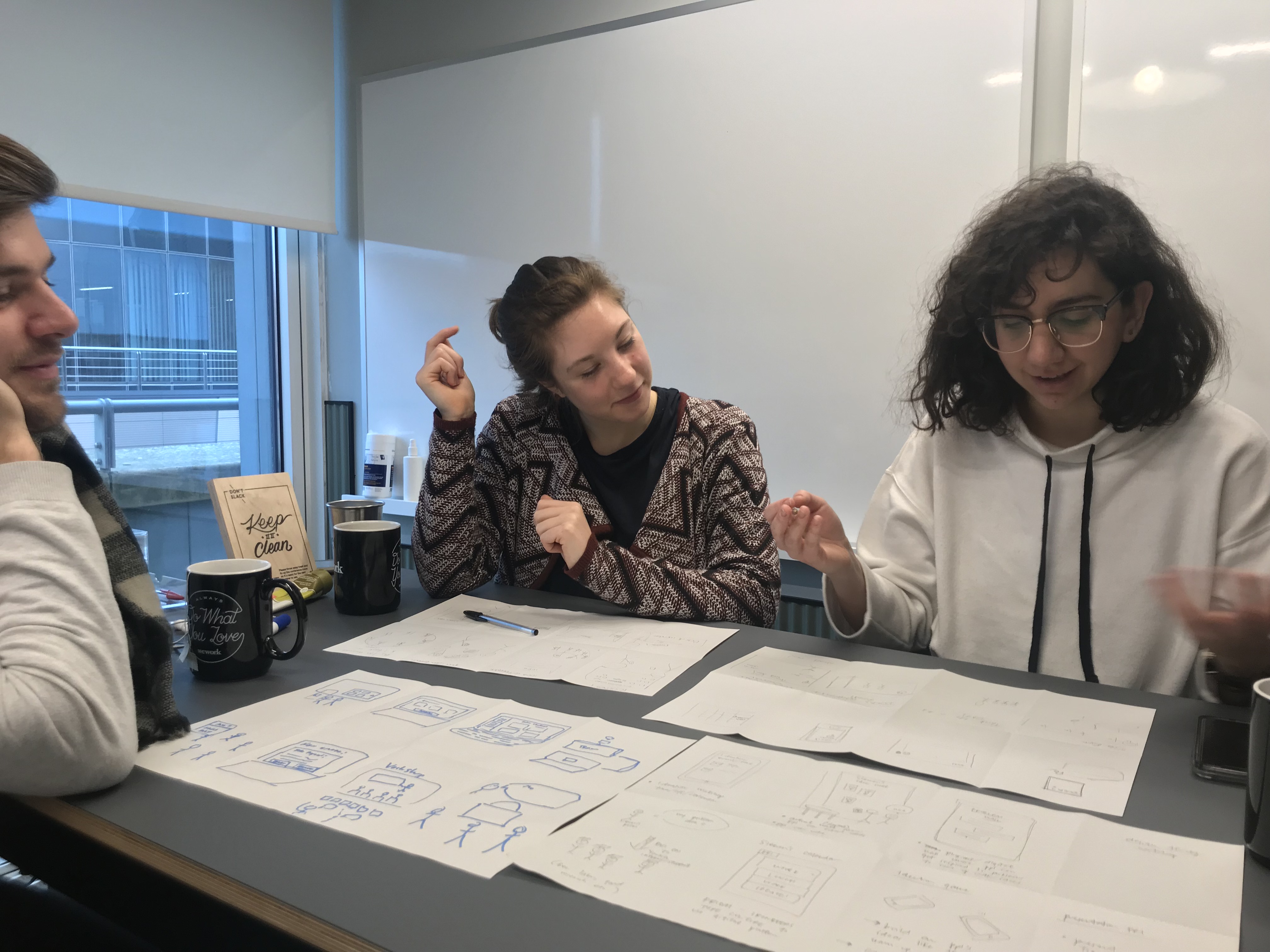
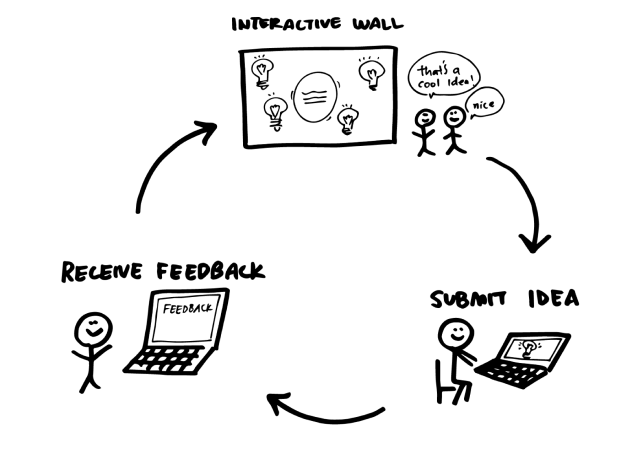
Each one of us chose a bad idea, and with some inspiration from the crazy 8s, each turned the bad idea into a feasible one. After sharing what we came up with, we noticed that we are all thinking along the same lines. So, we decided to combine our ideas into one well-polished solution and bring it to life!
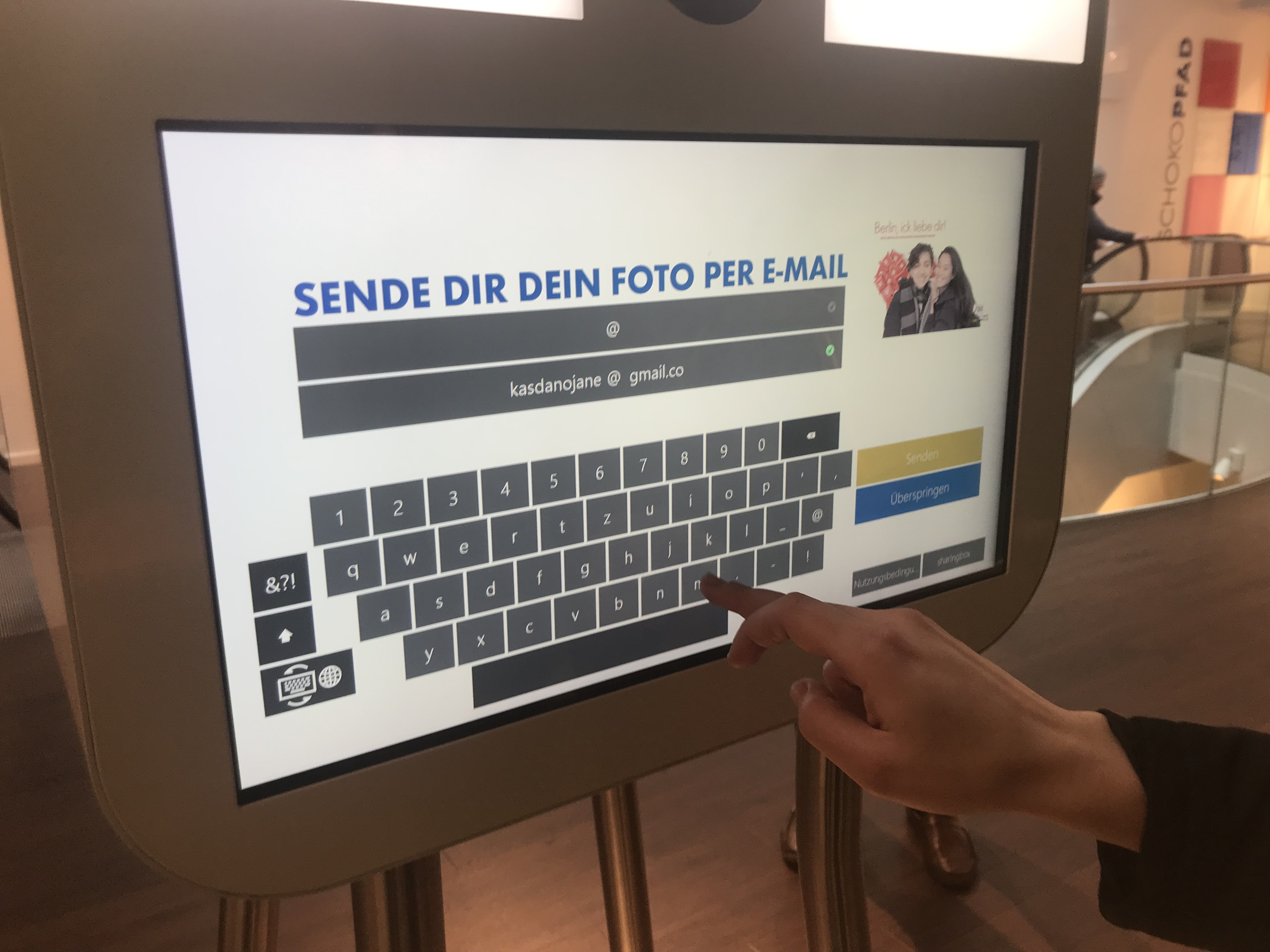
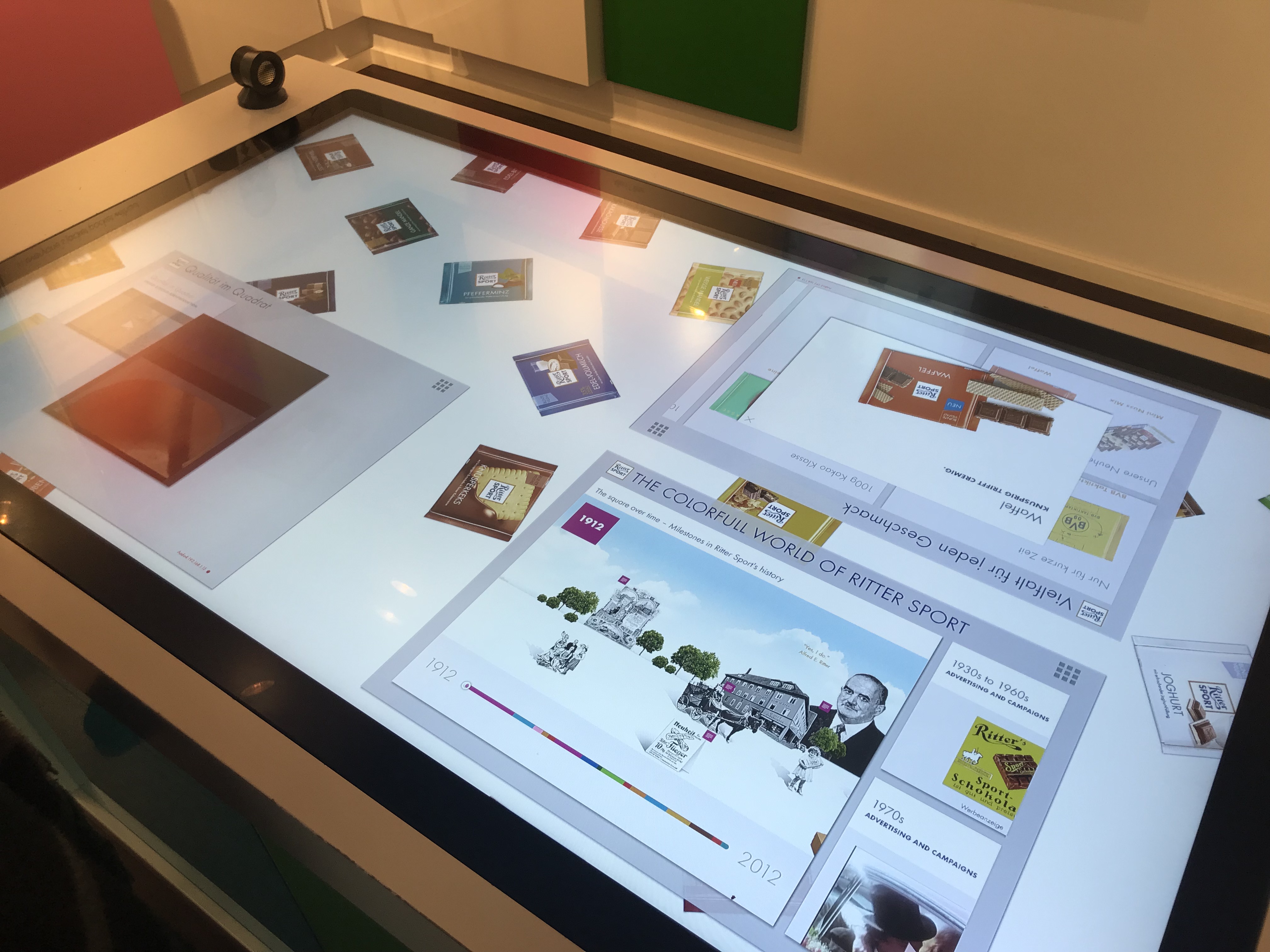
Since it was our first time creating a design for an interactive touch screen we had to get some first-hand experience with similar screens. Our research included a trip to Ritter Sport museum.
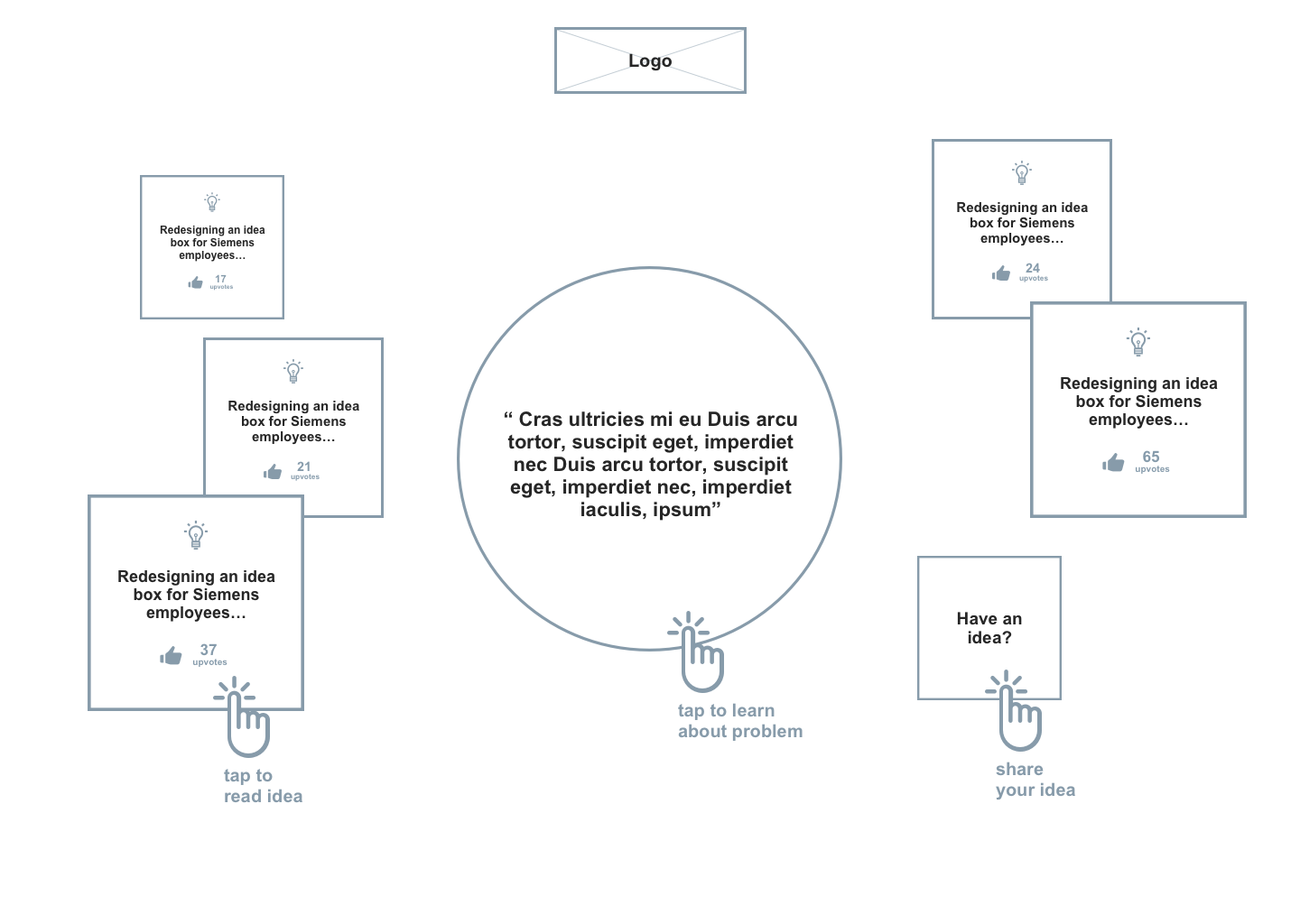
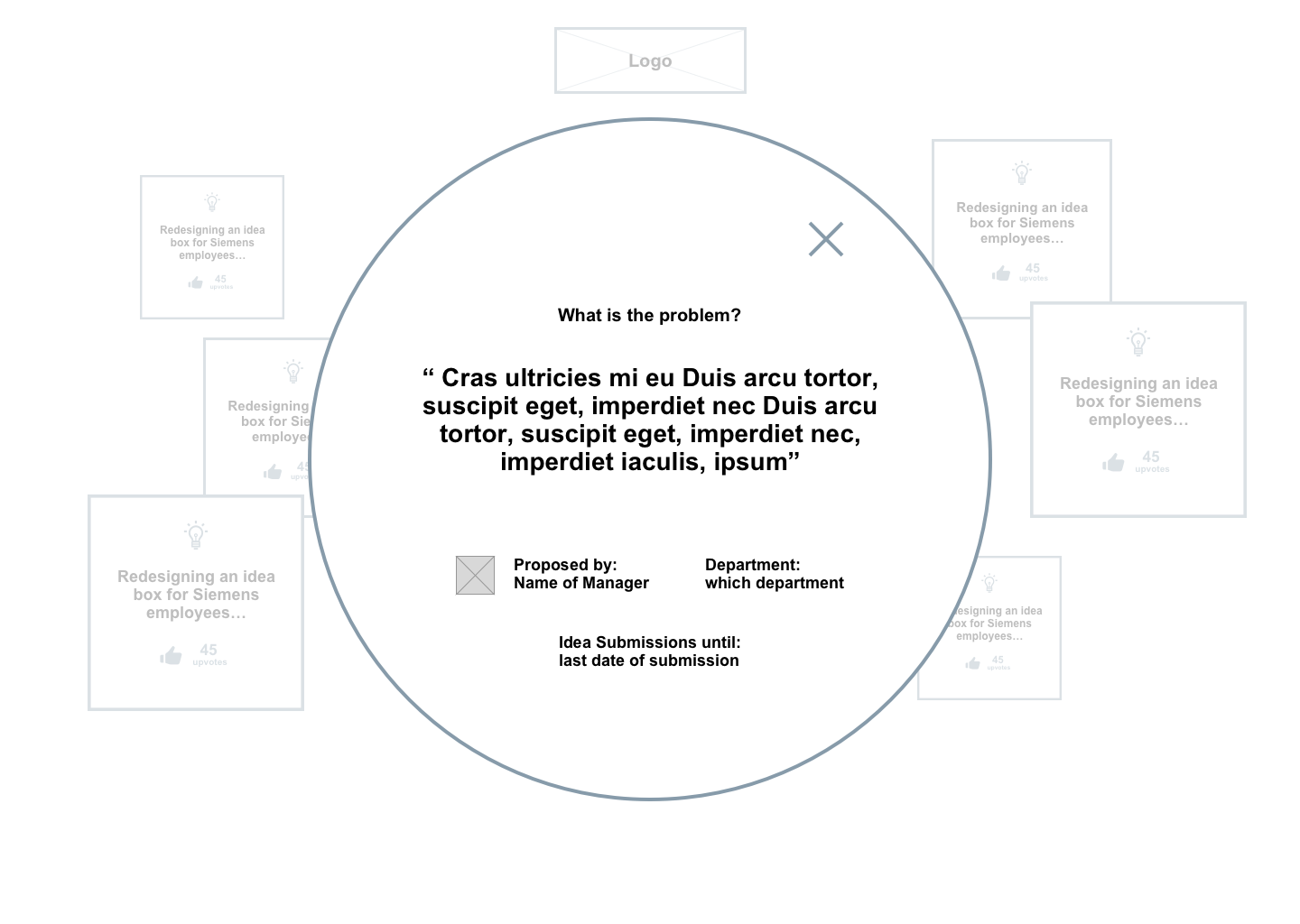
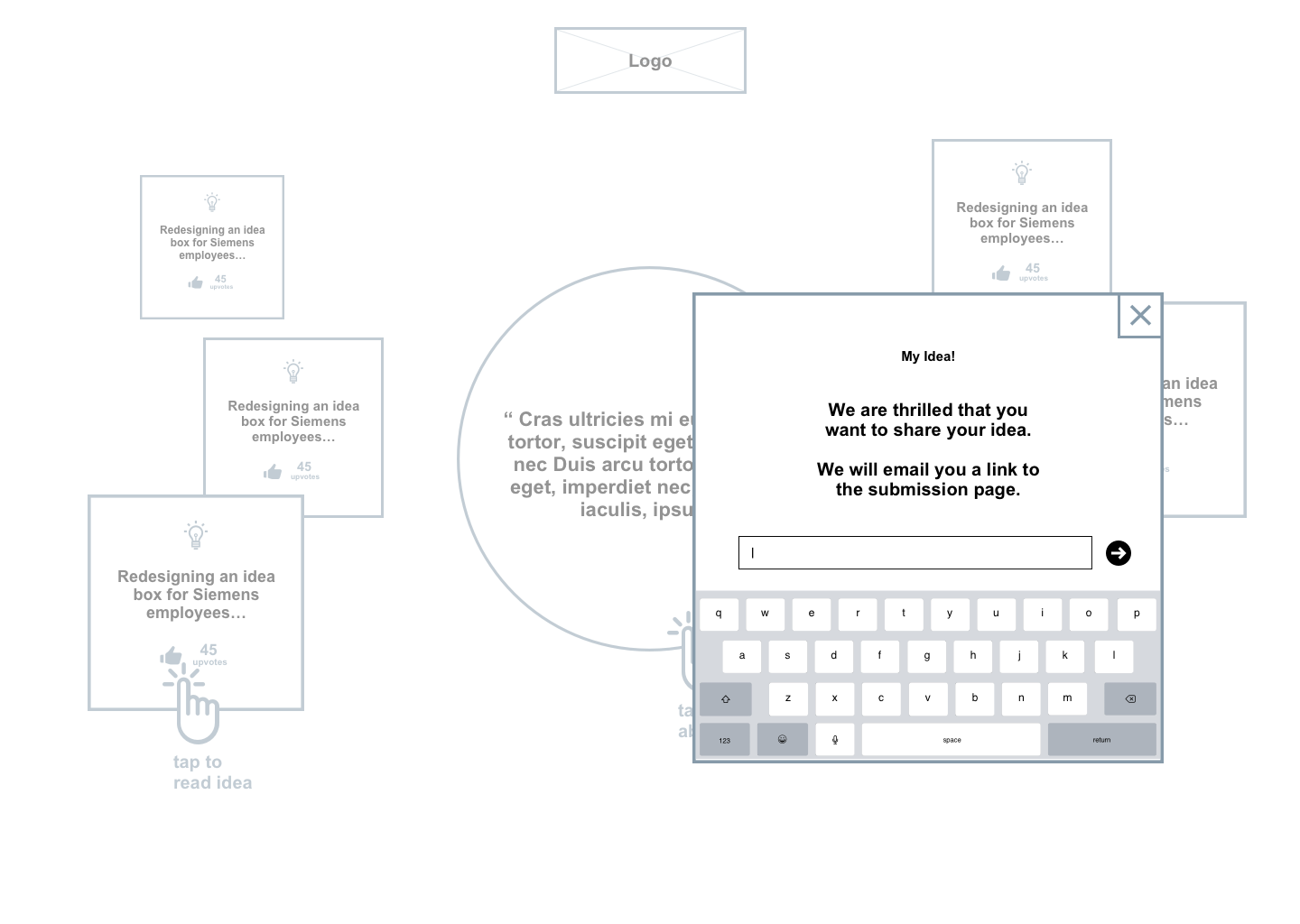
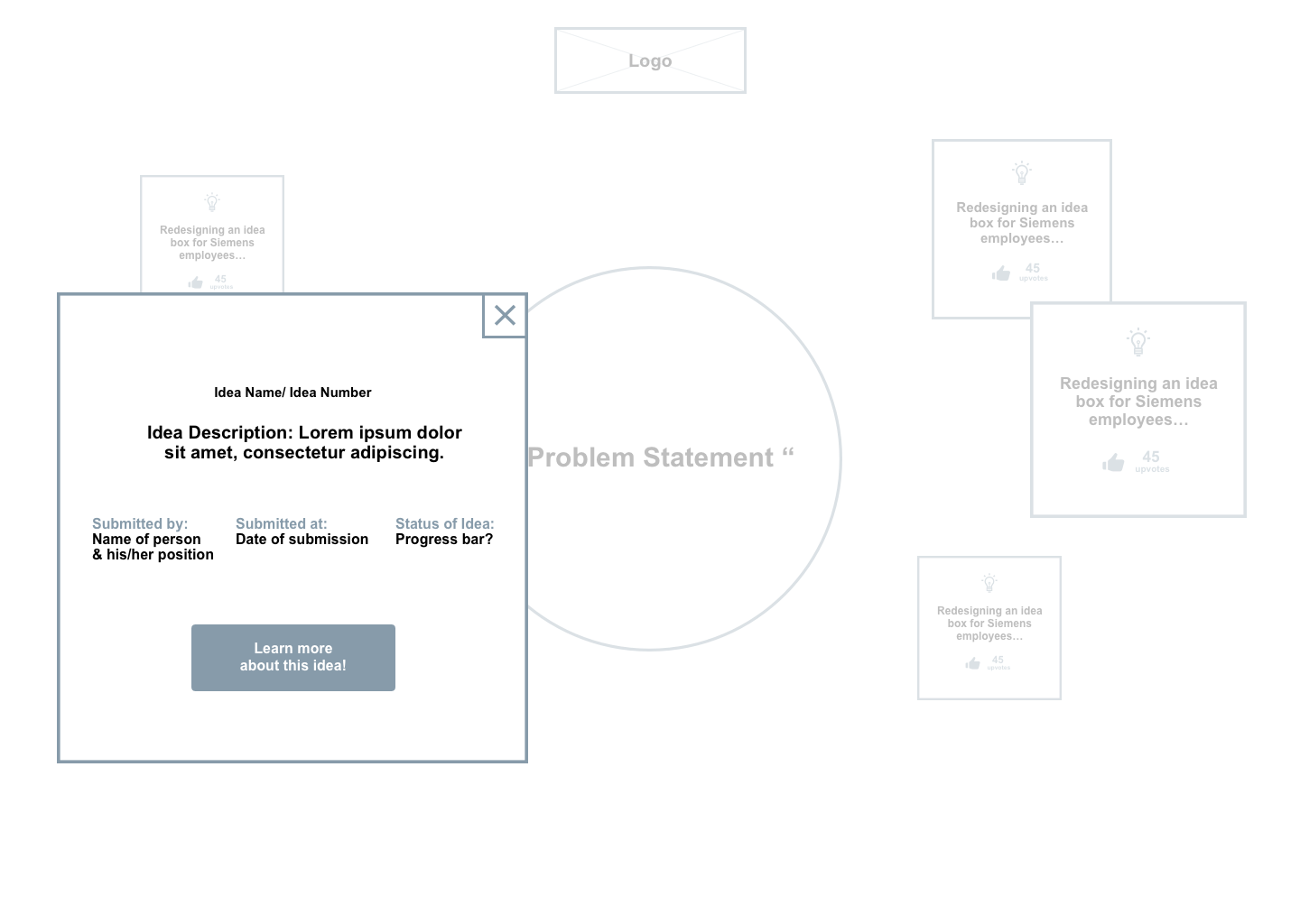
We made our mid-fidelity prototype interactive, and we had the chance to go to The Factory, a co-working space, and test our prototype with two employees from the Siemens office and three other people at The Factory.